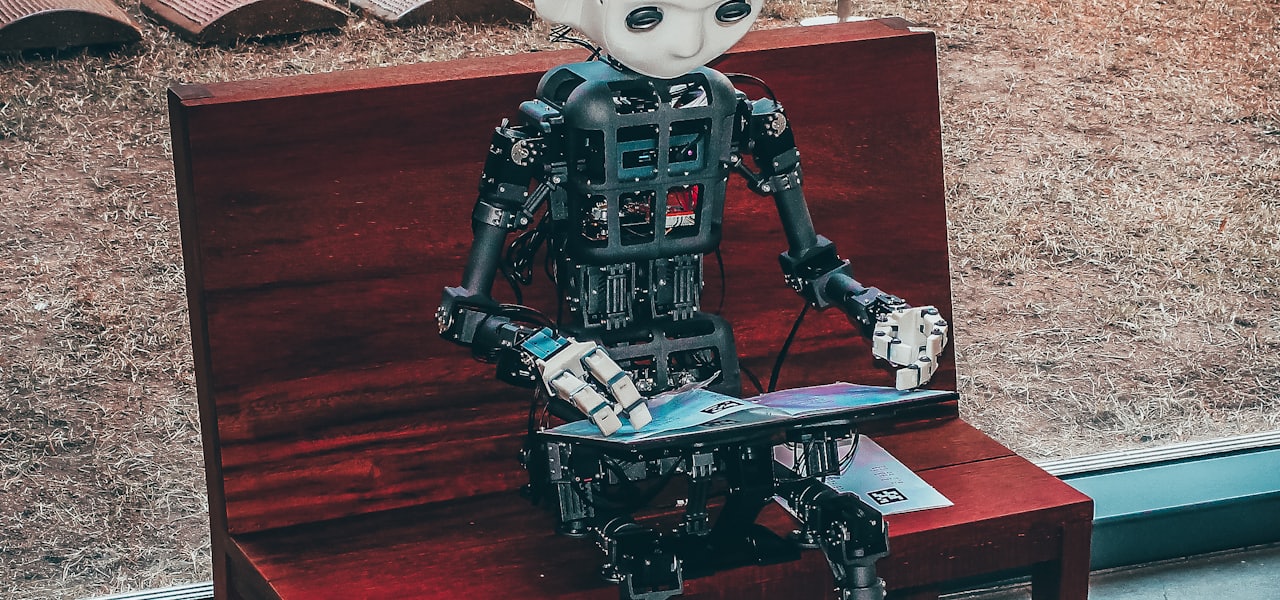
A grammar checker, in computing terms, is a program, or part of a program, that attempts to verify written text for grammatical correctness. Grammar checkers are most often implemented as a feature of a larger program, such as a word processor, but are also available as a stand-alone application that can be activated from within programs that work with editable text. The implementation of a grammar checker makes use of natural language processing. == History == The earliest "grammar checkers" were programs that checked for punctuation and style inconsistencies, rather than a complete range of possible grammatical errors. The first system was called Writer's Workbench, and was a set of writing tools included with Unix systems as far back as the 1970s. The whole Writer's Workbench package included several separate tools to check for various writing problems. The "diction" tool checked for wordy, trite, clichéd or misused phrases in a text. The tool would output a list of questionable phrases and provide suggestions for improving the writing. The "style" tool analyzed the writing style of a given text. It performed a number of readability tests on the text and output the results, and gave some statistical information about the sentences of the text. Aspen Software of Albuquerque, New Mexico released the earliest version of a diction and style checker for personal computers, Grammatik, in 1981. Grammatik was first available for a Radio Shack - TRS-80, and soon had versions for CP/M and the IBM PC. Reference Software International of San Francisco, California, acquired Grammatik in 1985. Development of Grammatik continued, and it became an actual grammar checker that could detect writing errors beyond simple style checking. Other early diction and style checking programs included Punctuation & Style, Correct Grammar, RightWriter and PowerEdit. While all the earliest programs started as simple diction and style checkers, all eventually added various levels of language processing, and developed some level of true grammar checking capability. Until 1992, grammar checkers were sold as add-on programs. There were a large number of different word processing programs available at that time, with WordPerfect and Microsoft Word the top two in market share. In 1992, Microsoft decided to add grammar checking as a feature of Word, and licensed CorrecText, a grammar checker from Houghton Mifflin that had not yet been marketed as a standalone product. WordPerfect answered Microsoft's move by acquiring Reference Software, and the direct descendant of Grammatik is still included with WordPerfect. As of 2019, grammar checkers are built into systems like Google Docs, browser extensions like Grammarly and Qordoba, desktop applications like Ginger, free and open-source software like LanguageTool, and text editor plugins like those available from WebSpellChecker Software. == Technical issues == The earliest writing style programs checked for wordy, trite, clichéd, or misused phrases in a text. This process was based on simple pattern matching. The heart of the program was a list of many hundreds or thousands of phrases that are considered poor writing by many experts. The list of questionable phrases included alternative wording for each phrase. The checking program would simply break text into sentences, check for any matches in the phrase dictionary, flag suspect phrases and show an alternative. These programs could also perform some mechanical checks. For example, they would typically flag doubled words, doubled punctuation, some capitalization errors, and other simple mechanical mistakes. True grammar checking is more complex. While a programming language has a very specific syntax and grammar, this is not so for natural languages. One can write a somewhat complete formal grammar for a natural language, but there are usually so many exceptions in real usage that a formal grammar is of minimal help in writing a grammar checker. One of the most important parts of a natural language grammar checker is a dictionary of all the words in the language, along with the part of speech of each word. The fact that a natural word may be used as any one of several parts of speech (such as "free" being used as an adjective, adverb, noun, or verb) greatly increases the complexity of any grammar checker. A grammar checker will find each sentence in a text, look up each word in the dictionary, and then attempt to parse the sentence into a form that matches a grammar. Using various rules, the program can then detect various errors, such as agreement in tense, number, word order, and so on. It is also possible to detect some stylistic problems with the text. For example, some popular style guides such as The Elements of Style deprecate excessive use of the passive voice. Grammar checkers may attempt to identify passive sentences and suggest an active-voice alternative. The software elements required for grammar checking are closely related to some of the development issues that need to be addressed for speech recognition software. In voice recognition, parsing can be used to help predict which word is most likely intended, based on part of speech and position in the sentence. In grammar checking, the parsing is used to detect words that fail to follow accepted grammar usage. Recently, research has focused on developing algorithms which can recognize grammar errors based on the context of the surrounding words. == Criticism == Grammar checkers are considered a type of foreign language writing aid which non-native speakers can use to proofread their writings as such programs endeavor to identify syntactical errors. However, as with other computerized writing aids such as spell checkers, popular grammar checkers are often criticized when they fail to spot errors and incorrectly flag correct text as erroneous. The linguist Geoffrey K. Pullum argued in 2007 that they were generally so inaccurate as to do more harm than good: "for the most part, accepting the advice of a computer grammar checker on your prose will make it much worse, sometimes hilariously incoherent."
Steerable filter
In image processing, a steerable filter is an orientation-selective filter that can be computationally rotated to any direction. Rather than designing a new filter for each orientation, a steerable filter is synthesized from a linear combination of a small, fixed set of "basis filters". This approach is efficient and is widely used for tasks that involve directionality, such as edge detection, texture analysis, and shape-from-shading. The principle of steerability has been generalized in deep learning to create equivariant neural networks, which can recognize features in data regardless of their orientation or position. == Example == A common example of a steerable filter is the first derivative of a two-dimensional Gaussian function. This filter responds strongly to oriented image features like edges. It is constructed from two basis filters: the partial derivative of the Gaussian with respect to the horizontal direction ( x {\displaystyle x} ) and the vertical direction ( y {\displaystyle y} ). If G ( x , y ) {\displaystyle G(x,y)} is the Gaussian function, and G x {\displaystyle G_{x}} and G y {\displaystyle G_{y}} are its partial derivatives (which measure the rate of change in the x {\displaystyle x} and y {\displaystyle y} directions, respectively), a new filter G θ {\displaystyle G_{\theta }} oriented at an angle θ {\displaystyle \theta } can be synthesized with the formula: G θ = cos ( θ ) G x + sin ( θ ) G y {\displaystyle G_{\theta }=\cos(\theta )G_{x}+\sin(\theta )G_{y}} Here, the basis filters G x {\displaystyle G_{x}} and G y {\displaystyle G_{y}} are weighted by cos ( θ ) {\displaystyle \cos(\theta )} and sin ( θ ) {\displaystyle \sin(\theta )} to "steer" the filter's sensitivity to the desired orientation. This is equivalent to taking the dot product of the direction vector ( cos θ , sin θ ) {\displaystyle (\cos \theta ,\sin \theta )} with the filter's gradient, ( G x , G y ) {\displaystyle (G_{x},G_{y})} . == Generalization in deep learning: Equivariant neural networks == The concept of steerability is foundational to equivariant neural networks, a class of models in deep learning designed to understand symmetries in data. A network is considered equivariant to a transformation (like a rotation) if transforming the input and then passing it through the network produces the same result as passing the input through the network first and then transforming the output. Formally, for a transformation T {\displaystyle T} and a network f {\displaystyle f} , this property is defined as f ( T ( input ) ) = T ( f ( input ) ) {\displaystyle f(T({\text{input}}))=T(f({\text{input}}))} . This built-in understanding of geometry makes models more data-efficient. For example, a network equivariant to rotation does not need to be shown an object in multiple orientations to learn to recognize it; it inherently understands that a rotated object is still the same object. This leads to better generalization and performance, particularly in scientific applications. === Mathematical foundation === Equivariant neural networks use principles from group theory to create operations that respect geometric symmetries, such as the SO(3) group for 3D rotations or the E(3) group for rotations and translations. Instead of learning standard filter kernels, these networks learn how to combine a fixed set of basis kernels. These basis functions are chosen so that they have well-defined behaviors under transformation groups. Spherical harmonics are frequently used as basis functions because they form a complete set of functions that behave predictably under rotation, making them ideal for creating steerable 3D kernels. Features within the network are treated as geometric tensors, which are mathematical objects (like scalars or vectors) that are "typed" by their behavior under transformations. These types correspond to the irreducible representations (irreps) of the group. The tensor product is the fundamental operation used to combine these typed features in a way that preserves equivariance, guaranteeing that the network as a whole respects the desired symmetry. Frameworks like e3nn simplify the construction of these networks by automating the complex mathematics of irreducible representations and tensor products. === Applications === Steerable and equivariant models are highly effective for problems with inherent geometric symmetries. Examples include: Protein structure analysis: SE(3)-equivariant networks can process 3D molecular structures while respecting their rotational and translational symmetries. 3D Point cloud processing: Rotation-equivariant filters built from steerable spherical functions can perform tasks like 3D shape classification. Computational chemistry: E(3)-equivariant graph neural networks are used to model interatomic potentials for molecular dynamics simulations, creating highly accurate and data-efficient models of physical systems.
Diffusion map
Diffusion maps is a dimensionality reduction or feature extraction algorithm introduced by Coifman and Lafon which computes a family of embeddings of a data set into Euclidean space (often low-dimensional) whose coordinates can be computed from the eigenvectors and eigenvalues of a diffusion operator on the data. The Euclidean distance between points in the embedded space is equal to the "diffusion distance" between probability distributions centered at those points. Different from linear dimensionality reduction methods such as principal component analysis (PCA), diffusion maps are part of the family of nonlinear dimensionality reduction methods which focus on discovering the underlying manifold that the data has been sampled from. By integrating local similarities at different scales, diffusion maps give a global description of the data-set. Compared with other methods, the diffusion map algorithm is robust to noise perturbation and computationally inexpensive. == Definition of diffusion maps == Following and , diffusion maps can be defined in four steps. === Connectivity === Diffusion maps exploit the relationship between heat diffusion and random walk Markov chain. The basic observation is that if we take a random walk on the data, walking to a nearby data-point is more likely than walking to another that is far away. Let ( X , A , μ ) {\displaystyle (X,{\mathcal {A}},\mu )} be a measure space, where X {\displaystyle X} is the data set and μ {\displaystyle \mu } represents the distribution of the points on X {\displaystyle X} . Based on this, the connectivity k {\displaystyle k} between two data points, x {\displaystyle x} and y {\displaystyle y} , can be defined as the probability of walking from x {\displaystyle x} to y {\displaystyle y} in one step of the random walk. Usually, this probability is specified in terms of a kernel function of the two points: k : X × X → R {\displaystyle k:X\times X\rightarrow \mathbb {R} } . For example, the popular Gaussian kernel: k ( x , y ) = exp ( − | | x − y | | 2 ϵ ) {\displaystyle k(x,y)=\exp \left(-{\frac {||x-y||^{2}}{\epsilon }}\right)} More generally, the kernel function has the following properties k ( x , y ) = k ( y , x ) {\displaystyle k(x,y)=k(y,x)} ( k {\displaystyle k} is symmetric) k ( x , y ) ≥ 0 ∀ x , y {\displaystyle k(x,y)\geq 0\,\,\forall x,y} ( k {\displaystyle k} is positivity preserving). The kernel constitutes the prior definition of the local geometry of the data-set. Since a given kernel will capture a specific feature of the data set, its choice should be guided by the application that one has in mind. This is a major difference with methods such as principal component analysis, where correlations between all data points are taken into account at once. Given ( X , k ) {\displaystyle (X,k)} , we can then construct a reversible discrete-time Markov chain on X {\displaystyle X} (a process known as the normalized graph Laplacian construction): d ( x ) = ∫ X k ( x , y ) d μ ( y ) {\displaystyle d(x)=\int _{X}k(x,y)d\mu (y)} and define: p ( x , y ) = k ( x , y ) d ( x ) {\displaystyle p(x,y)={\frac {k(x,y)}{d(x)}}} Although the new normalized kernel does not inherit the symmetric property, it does inherit the positivity-preserving property and gains a conservation property: ∫ X p ( x , y ) d μ ( y ) = 1 {\displaystyle \int _{X}p(x,y)d\mu (y)=1} === Diffusion process === From p ( x , y ) {\displaystyle p(x,y)} we can construct a transition matrix of a Markov chain ( M {\displaystyle M} ) on X {\displaystyle X} . In other words, p ( x , y ) {\displaystyle p(x,y)} represents the one-step transition probability from x {\displaystyle x} to y {\displaystyle y} , and M t {\displaystyle M^{t}} gives the t-step transition matrix. We define the diffusion matrix L {\displaystyle L} (it is also a version of graph Laplacian matrix) L i , j = k ( x i , x j ) {\displaystyle L_{i,j}=k(x_{i},x_{j})\,} We then define the new kernel L i , j ( α ) = k ( α ) ( x i , x j ) = L i , j ( d ( x i ) d ( x j ) ) α {\displaystyle L_{i,j}^{(\alpha )}=k^{(\alpha )}(x_{i},x_{j})={\frac {L_{i,j}}{(d(x_{i})d(x_{j}))^{\alpha }}}\,} or equivalently, L ( α ) = D − α L D − α {\displaystyle L^{(\alpha )}=D^{-\alpha }LD^{-\alpha }\,} where D is a diagonal matrix and D i , i = ∑ j L i , j . {\displaystyle D_{i,i}=\sum _{j}L_{i,j}.} We apply the graph Laplacian normalization to this new kernel: M = ( D ( α ) ) − 1 L ( α ) , {\displaystyle M=({D}^{(\alpha )})^{-1}L^{(\alpha )},\,} where D ( α ) {\displaystyle D^{(\alpha )}} is a diagonal matrix and D i , i ( α ) = ∑ j L i , j ( α ) . {\displaystyle {D}_{i,i}^{(\alpha )}=\sum _{j}L_{i,j}^{(\alpha )}.} p ( x j , t | x i ) = M i , j t {\displaystyle p(x_{j},t|x_{i})=M_{i,j}^{t}\,} One of the main ideas of the diffusion framework is that running the chain forward in time (taking larger and larger powers of M {\displaystyle M} ) reveals the geometric structure of X {\displaystyle X} at larger and larger scales (the diffusion process). Specifically, the notion of a cluster in the data set is quantified as a region in which the probability of escaping this region is low (within a certain time t). Therefore, t not only serves as a time parameter, but it also has the dual role of scale parameter. The eigendecomposition of the matrix M t {\displaystyle M^{t}} yields M i , j t = ∑ l λ l t ψ l ( x i ) ϕ l ( x j ) {\displaystyle M_{i,j}^{t}=\sum _{l}\lambda _{l}^{t}\psi _{l}(x_{i})\phi _{l}(x_{j})\,} where { λ l } {\displaystyle \{\lambda _{l}\}} is the sequence of eigenvalues of M {\displaystyle M} and { ψ l } {\displaystyle \{\psi _{l}\}} and { ϕ l } {\displaystyle \{\phi _{l}\}} are the biorthogonal left and right eigenvectors respectively. Due to the spectrum decay of the eigenvalues, only a few terms are necessary to achieve a given relative accuracy in this sum. ==== Parameter α and the diffusion operator ==== The reason to introduce the normalization step involving α {\displaystyle \alpha } is to tune the influence of the data point density on the infinitesimal transition of the diffusion. In some applications, the sampling of the data is generally not related to the geometry of the manifold we are interested in describing. In this case, we can set α = 1 {\displaystyle \alpha =1} and the diffusion operator approximates the Laplace–Beltrami operator. We then recover the Riemannian geometry of the data set regardless of the distribution of the points. To describe the long-term behavior of the point distribution of a system of stochastic differential equations, we can use α = 0.5 {\displaystyle \alpha =0.5} and the resulting Markov chain approximates the Fokker–Planck diffusion. With α = 0 {\displaystyle \alpha =0} , it reduces to the classical graph Laplacian normalization. === Diffusion distance === The diffusion distance at time t {\displaystyle t} between two points can be measured as the similarity of two points in the observation space with the connectivity between them. It is given by D t ( x i , x j ) 2 = ∑ y ( p ( y , t | x i ) − p ( y , t | x j ) ) 2 ϕ 0 ( y ) {\displaystyle D_{t}(x_{i},x_{j})^{2}=\sum _{y}{\frac {(p(y,t|x_{i})-p(y,t|x_{j}))^{2}}{\phi _{0}(y)}}} where ϕ 0 ( y ) {\displaystyle \phi _{0}(y)} is the stationary distribution of the Markov chain, given by the first left eigenvector of M {\displaystyle M} . Explicitly: ϕ 0 ( y ) = d ( y ) ∑ z ∈ X d ( z ) {\displaystyle \phi _{0}(y)={\frac {d(y)}{\sum _{z\in X}d(z)}}} Intuitively, D t ( x i , x j ) {\displaystyle D_{t}(x_{i},x_{j})} is small if there is a large number of short paths connecting x i {\displaystyle x_{i}} and x j {\displaystyle x_{j}} . There are several interesting features associated with the diffusion distance, based on our previous discussion that t {\displaystyle t} also serves as a scale parameter: Points are closer at a given scale (as specified by D t ( x i , x j ) {\displaystyle D_{t}(x_{i},x_{j})} ) if they are highly connected in the graph, therefore emphasizing the concept of a cluster. This distance is robust to noise, since the distance between two points depends on all possible paths of length t {\displaystyle t} between the points. From a machine learning point of view, the distance takes into account all evidences linking x i {\displaystyle x_{i}} to x j {\displaystyle x_{j}} , allowing us to conclude that this distance is appropriate for the design of inference algorithms based on the majority of preponderance. === Diffusion process and low-dimensional embedding === The diffusion distance can be calculated using the eigenvectors by D t ( x i , x j ) 2 = ∑ l λ l 2 t ( ψ l ( x i ) − ψ l ( x j ) ) 2 {\displaystyle D_{t}(x_{i},x_{j})^{2}=\sum _{l}\lambda _{l}^{2t}(\psi _{l}(x_{i})-\psi _{l}(x_{j}))^{2}\,} So the eigenvectors can be used as a new set of coordinates for the data. The diffusion map is defined as: Ψ t ( x ) = ( λ 1 t ψ 1 ( x ) , λ 2 t ψ 2 ( x ) , … , λ k t ψ k ( x ) ) {\displaystyle \Psi _{t}(x)=(\lambda _{1}^{t}\psi _{1}(x),\lambda _{2}^{t}\psi _{2}(x),\ld
FERET (facial recognition technology)
The Facial Recognition Technology (FERET) program was a government-sponsored project that aimed to create a large, automatic face-recognition system for intelligence, security, and law enforcement purposes. The program began in 1993 under the combined leadership of Dr. Harry Wechsler at George Mason University (GMU) and Dr. Jonathon Phillips at the Army Research Laboratory (ARL) in Adelphi, Maryland and resulted in the development of the Facial Recognition Technology (FERET) database. The goal of the FERET program was to advance the field of face recognition technology by establishing a common database of facial imagery for researchers to use and setting a performance baseline for face-recognition algorithms. Potential areas where this face-recognition technology could be used include: Automated searching of mug books using surveillance photos Controlling access to restricted facilities or equipment Checking the credentials of personnel for background and security clearances Monitoring airports, border crossings, and secure manufacturing facilities for particular individuals Finding and logging multiple appearances of individuals over time in surveillance videos Verifying identities at ATM machines Searching photo ID records for fraud detection The FERET database has been used by more than 460 research groups and is currently managed by the National Institute of Standards and Technology (NIST). By 2017, the FERET database has been used to train artificial intelligence programs and computer vision algorithms to identify and sort faces. == History == The origin of facial recognition technology is largely attributed to Woodrow Wilson Bledsoe and his work in the 1960s, when he developed a system to identify faces from a database of thousands of photographs. The FERET program first began as a way to unify a large body of face-recognition technology research under a standard database. Before the program's inception, most researchers created their own facial imagery database that was attuned to their own specific area of study. These personal databases were small and usually consisted of images from less than 50 individuals. The only notable exceptions were the following: Alex Pentland’s database of around 7500 facial images at the Massachusetts Institute of Technology (MIT) Joseph Wilder's database of around 250 individuals at Rutgers University Christoph von der Malsburg’s database of around 100 facial images at the University of Southern California (USC) The lack of a common database made it difficult to compare the results of face recognition studies in the scientific literature because each report involved different assumptions, scoring methods, and images. Most of the papers that were published did not use images from a common database nor follow a standard testing protocol. As a result, researchers were unable to make informed comparisons between the performances of different face-recognition algorithms. In September 1993, the FERET program was spearheaded by Dr. Harry Wechsler and Dr. Jonathon Phillips under the sponsorship of the U.S. Department of Defense Counterdrug Technology Development Program through DARPA with ARL serving as technical agent. === Phase I === The first facial images for the FERET database were collected from August 1993 to December 1994, a time period known as Phase I. The pictures were initially taken with a 35-mm camera at both GMU and ARL facilities, and the same physical setup was used in each photography session to keep the images consistent. For each individual, the pictures were taken in sets, including two frontal views, a right and left profile, a right and left quarter profile, a right and left half profile, and sometimes at five extra locations. Therefore, a set of images consisted of 5 to 11 images per person. At the end of Phase I, the FERET database had collected 673 sets of images, resulting in over 5000 total images. At the end of Phase I, five organizations were given the opportunity to test their face-recognition algorithm on the newly created FERET database in order to compare how they performed against each other. There five principal investigators were: MIT, led by Alex Pentland Rutgers University, led by Joseph Wilder The Analytic Science Company (TASC), led by Gale Gordon The University of Illinois at Chicago (UIC) and the University of Illinois at Urbana-Champaign, led by Lewis Sadler and Thomas Huang USC, led by Christoph von der Malsburg During this evaluation, three different automatic tests were given to the principal investigators without human intervention: The large gallery test, which served to baseline how algorithms performed against a database when it has not been properly tuned. The false-alarm test, which tested how well the algorithm monitored an airport for suspected terrorists. The rotation test, which measured how well the algorithm performed when the images of an individual in the gallery had different poses compared to those in the probe set. For most of the test trials, the algorithms developed by USC and MIT managed to outperform the other three algorithms for the Phase I evaluation. === Phase II === Phase II began after Phase I, and during this time, the FERET database acquired more sets of facial images. By the start of the Phase II evaluation in March 1995, the database contained 1109 sets of images for a total of 8525 images of 884 individuals. During the second evaluation, the same algorithms from the Phase I evaluation were given a single test. However, the database now contained significantly more duplicate images (463, compared to the previous 60), making the test more challenging. === Phase III === Afterwards, the FERET program entered Phase III where another 456 sets of facial images were added to the database. The Phase III evaluation, which took place in September 1996, aimed to not only gauge the progress of the algorithms since the Phase I assessment but also identify the strengths and weaknesses of each algorithm and determine future objectives for research. By the end of 1996, the FERET database had accumulated a total of 14,126 facial images pertaining to 1199 different individuals as well as 365 duplicate sets of images. As a result of the FERET program, researchers were able to establish a common baseline for comparing different face-recognition algorithms and create a large standard database of facial images that is open for research. In 2003, DARPA released a high-resolution, 24-bit color version of the images in the FERET database (existing reference).
NOMINATE (scaling method)
NOMINATE (an acronym for nominal three-step estimation) is a multidimensional scaling application developed by US political scientists Keith T. Poole and Howard Rosenthal in the early 1980s to analyze preferential and choice data, such as legislative roll-call voting behavior. In its most well-known application, members of the US Congress are placed on a two-dimensional map, with politicians who are ideologically similar (i.e. who often vote the same) being close together. One of these two dimensions corresponds to the familiar left–right political spectrum (liberal–conservative in the United States). As computing capabilities grew, Poole and Rosenthal developed multiple iterations of their NOMINATE procedure: the original D-NOMINATE method, W-NOMINATE, and most recently DW-NOMINATE (for dynamic, weighted NOMINATE). In 2009, Poole and Rosenthal were the first recipients of the Society for Political Methodology's Best Statistical Software Award for their development of NOMINATE. In 2016, the society awarded Poole its Career Achievement Award, stating that "the modern study of the U.S. Congress would be simply unthinkable without NOMINATE legislative roll call voting scores." == Procedure == The main procedure is an application of multidimensional scaling techniques to political choice data. Though there are important technical differences between these types of NOMINATE scaling procedures, all operate under the same fundamental assumptions. First, that alternative choices can be projected on a basic, low-dimensional (often two-dimensional) Euclidean space. Second, within that space, individuals have utility functions which are bell-shaped (normally distributed), and maximized at their ideal point. Because individuals also have symmetric, single-peaked utility functions which center on their ideal point, ideal points represent individuals' most preferred outcomes. That is, individuals most desire outcomes closest their ideal point, and will choose/vote probabilistically for the closest outcome. Ideal points can be recovered from observing choices, with individuals exhibiting similar preferences placed more closely than those behaving dissimilarly. It is helpful to compare this procedure to producing maps based on driving distances between cities. For example, Los Angeles is about 1,800 miles from St. Louis; St. Louis is about 1,200 miles from Miami; and Miami is about 2,700 miles from Los Angeles. From this (dis)similarities data, any map of these three cities should place Miami far from Los Angeles, with St. Louis somewhere in between (though a bit closer to Miami than Los Angeles). Just as cities like Los Angeles and San Francisco would be clustered on a map, NOMINATE places ideologically similar legislators (e.g., liberal Senators Barbara Boxer (D-Calif.) and Al Franken (D-Minn.)) closer to each other, and farther from dissimilar legislators (e.g., conservative Senator Tom Coburn (R-Okla.)) based on the degree of agreement between their roll call voting records. At the heart of the NOMINATE procedures (and other multidimensional scaling methods, such as Poole's Optimal Classification method) are algorithms they utilize to arrange individuals and choices in low dimensional (usually two-dimensional) space. Thus, NOMINATE scores provide "maps" of legislatures. Using NOMINATE procedures to study congressional roll call voting behavior from the First Congress to the present-day, Poole and Rosenthal published Congress: A Political-Economic History of Roll Call Voting in 1997 and the revised edition Ideology and Congress in 2007. In 2009, Poole and Rosenthal were named the first recipients of the Society for Political Methodology's Best Statistical Software Award for their development of NOMINATE, a recognition conferred to "individual(s) for developing statistical software that makes a significant research contribution". In 2016, Keith T. Poole was awarded the Society for Political Methodology's Career Achievement Award. The citation for this award reads, in part, "One can say perfectly correctly, and without any hyperbole: the modern study of the U.S. Congress would be simply unthinkable without NOMINATE legislative roll call voting scores. NOMINATE has produced data that entire bodies of our discipline—and many in the press—have relied on to understand the U.S. Congress." == Dimensions == Poole and Rosenthal demonstrate that—despite the many complexities of congressional representation and politics—roll call voting in both the House and the Senate can be organized and explained by no more than two dimensions throughout the sweep of American history. The first dimension (horizontal or x-axis) is the familiar left-right (or liberal-conservative) spectrum on economic matters. The second dimension (vertical or y-axis) picks up attitudes on cross-cutting, salient issues of the day (which include or have included slavery, bimetallism, civil rights, regional, and social/lifestyle issues). Rosenthal and Poole have initially argued that the first dimension refers to socio-economic matters and the second dimension to race-relations. However, the often confusing and residual nature of the second dimension has led to the second dimension being largely ignored by other researchers. For the most part, congressional voting is uni-dimensional, with most of the variation in voting patterns explained by placement along the liberal-conservative first dimension. While the first dimension of the DW-NOMINATE score is able to predict results at 83% accuracy, the addition of the second dimension only increases accuracy to 85%. Furthermore, the second dimension only provided a significant increase in accuracy for Congresses 1-99. As late as the 1990s, the second dimension was able to measure partisan splits in abortion and gun rights issues. However, a 2017 analysis found that since 1987, the votes of the US Congress had best fit a one-dimensional model, suggesting increasing party polarization after 1987. == Interpretation of nominate scores == For illustrative purposes, consider the following plots which use W-NOMINATE scores to scale members of Congress and uses the probabilistic voting model (in which legislators farther from the "cutting line" between "yea" and "nay" outcomes become more likely to vote in the predicted manner) to illustrate some major Congressional votes in the 1990s. Some of these votes, like the House's vote on President Clinton's welfare reform package (the Personal Responsibility and Work Opportunity Act of 1996) are best modeled through the use of the first (economic liberal-conservative) dimension. On the welfare reform vote, nearly all Republicans joined the moderate-conservative bloc of House Democrats in voting for the bill, while opposition was virtually confined to the most liberal Democrats in the House. The errors (those representatives on the "wrong" side of the cutting line which separates predicted "yeas" and predicted "nays") are generally close to the cutting line, which is what we would expect. A legislator directly on the cutting line is indifferent between voting "yea" and "nay" on the measure. All members are shown on the left panel of the plot, while only errors are shown on the right panel: Economic ideology also dominates the Senate vote on the Balanced Budget Amendment of 1995: On other votes, however, a second dimension (which has recently come to represent attitudes on cultural and lifestyle issues) is important. For example, roll call votes on gun control routinely split party coalitions, with socially conservative "blue dog" Democrats joining most Republicans in opposing additional regulation and socially liberal Republicans joining most Democrats in supporting gun control. The addition of the second dimension accounts for these inter-party differences, and the cutting line is more horizontal than vertical (meaning the cleavage is found on the second dimension rather than the first dimension on these votes) This pattern was evident in the 1991 House vote to require waiting periods on handguns: == Political ideology == DW-NOMINATE scores have been used widely to describe the political ideology of political actors, political parties and political institutions. For instance, a score in the first dimension that is close to either pole means that such score is located at one of the extremes in the liberal-conservative scale. So, a score closer to 1 is described as conservative whereas a score closer to −1 can be described as liberal. Finally, a score at zero or close to zero is described as moderate. == Political polarization == Poole and Rosenthal (beginning with their 1984 article "The Polarization of American Politics") have also used NOMINATE data to show that, since the 1970s, party delegations in Congress have become ideologically homogeneous and distant from one another (a phenomenon known as "polarization"). Using DW-NOMINATE scores (which permit direct comparisons between members of different Congress
Backend as a service
Backend as a service (BaaS), sometimes also referred to as mobile backend as a service (MBaaS), is a service for providing web app and mobile app developers with a way to easily build a backend to their frontend applications. Features available include user management, push notifications, and integration with social networking services. These services are provided via the use of custom software development kits (SDKs) and application programming interfaces (APIs). BaaS is a relatively recent development in cloud computing, with most BaaS startups dating from 2011 or later. Some of the most popular service providers are AWS Amplify and Firebase. == Purpose == Web and mobile apps require a similar set of features on the backend, including notification service, integration with social networks, and cloud storage. Each of these services has its own API that must be individually incorporated into an app, a process that can be time-consuming and complicated for app developers. BaaS providers form a bridge between the frontend of an application and various cloud-based backends via a unified API and SDK. Providing a consistent way to manage backend data means that developers do not need to redevelop their own backend for each of the services that their apps need to access, potentially saving both time and money. Although similar to other cloud-computing business models, such as serverless computing, software as a service (SaaS), infrastructure as a service (IaaS), and platform as a service (PaaS), BaaS is distinct from these other services in that it specifically addresses the cloud-computing needs of web and mobile app developers by providing a unified means of connecting their apps to cloud services. == Features == BaaS providers offer different set of features and backend tools. Some of the most common features include: Database management. Most BaaS solutions provide SQL and/or NoSQL database management services for applications. Developers can store their app data without deploying and managing databases themselves. BaaS usually provides client SDKs, REST and GraphQL APIs for the frontend to interact with databases. File storage. BaaS providers often offer storage solutions for media files, user uploads, and other binary data. Applications can upload, download, and delete files through provided SDKs and APIs. Authentication and authorization. Some BaaS offer authentication and authorization services that allow developers to easily manage app users. This includes user sign-up, login, password reset, social media login integration through OAuth, user group and permission management etc. Notification service. Some BaaS providers such as Firebase and AWS Amplify have notification services that can send custom emails to users and push native notifications on mobile platforms. This is especially useful for applications that need to send messages, alerts, and reminders. Cloud functions. Some BaaS allow developers to deploy and run serverless functions. The functions are usually stateless and can be triggered by various ways including HTTP requests, SDK invocation, background server events, and cloud scheduled executions. Different providers offer runtime support for different languages, some of the popular languages are JavaScript/TypeScript (Node.js, Deno), Python, Java/Kotlin. Cloud functions extend the potential and flexibility of BaaS by allowing developers to write custom functionalities for their apps, working in a way similar to a traditional REST API backend framework. Usage analytics. Analytics data about application usage is often included in BaaS. This allows developers to monitor user behaviors and make decisions correspondingly in marketing strategies and performance optimizations. UI design. Some BaaS providers, such as AWS Amplify and Backendless, offer user interface designing tools that help developers design the frontend UI of web and mobile apps. While this may be useful for small teams and individual developers, UI design assistance may not be conventional in BaaS as it goes beyond the scope of backend infrastructure. Real-Time. Real-time features in a BaaS platform ensure that data updates and synchronizations occur instantly across all clients, making changes immediately visible to users. This is crucial for applications like live chat and collaborative tools, using technologies like WebSockets to maintain continuous server-client connections. == Service providers == BaaS providers have a broad focus, providing SDKs and APIs that work for app development on multiple platforms with different technology stacks, such as JavaScript (for Web apps), Flutter, Java/Kotlin (for Android apps), Swift/Objective-C (for iOS/MacOS/WatchOS/TvOS apps), .NET (for Windows) and others. BaaS providers also come in different types, suiting developers of different needs. === Cloud-based BaaS === Most BaaS providers host backend platforms on their cloud servers. They also manage the infrastructure, security, and scalability of the platforms. Developers can access the backend services via a web interface or the provided APIs. Some examples of cloud-based BaaS include Firebase (hosted on Google Cloud Platform), AWS Amplify (hosted on Amazon Web Services), and Microsoft Azure Mobile Apps (hosted on Microsoft Azure). === Self-hosted BaaS === Self-hosted BaaS allow developers to host backend on their own servers, providing more flexibility and potential to customization compared to cloud-based BaaS, which often is more difficult to migrate from. However, developers are also in charge of managing the infrastructure, security, and scalability of their servers. === Mobile BaaS === Mobile backend as a service (MBaaS) is a type of BaaS specifically for applications deployed in mobile systems. While some references use MBaaS interchangeably for BaaS, BaaS can have a wider variety of support such as for web apps and desktop apps. == Business model == BaaS providers generate revenue from their services in various ways, often using a freemium model. Under this model, a client receives a certain number of free active users or API calls per month, and pays a fee for each user or call over this limit. Alternatively, clients can pay a set fee for a package which allows for a greater number of calls or active users per month. There are also flat fee plans that make the pricing more predictable. Some of the providers offer the unlimited API calls inside their free plan offerings. Another business model that has been used by a lot of BaaS providers is PAYG (pay as you go), which has a flexible cost based on developers' usage of database, storage, bandwidth, function calls, user numbers etc.
Andrej Mrvar
Andrej Mrvar is a Slovenian computer scientist and a professor at the University of Ljubljana's Faculty of Social Sciences. He is known for his work in network analysis, graph drawing, decision making, virtual reality, timing and data processing of sports competitions. == Education and career == He is well known for his work on Pajek, a free software for analysis and visualization of large networks. Mrvar began work on Pajek in 1996 with Vladimir Batagelj. His book Exploratory Social Network Analysis with Pajek, coauthored with Wouter de Nooy and Vladimir Batagelj, is his most cited work. It was published by Cambridge University Press in three editions (first 2005, second 2011, and third 2018). The book was translated into Japanese (2009) and Chinese (first edition 2012, second 2014). With Anuška Ferligoj, he was a founding co-editor-in-chief of the Metodološki zvezki - Advances in Methodology and Statistics journal. == Awards and honors == Vidmar Award (Faculty of Electrical and Computer Engineering, University of Ljubljana): 1988, 1990 First prizes for contributions (with Vladimir Batagelj) to Graph Drawing Contests in years: 1995, 1996, 1997, 1998, 1999, 2000 and 2005 / Graph Drawing Hall of Fame. Award of University of Ljubljana for contributions in education and research (Svečana listina Univerze v Ljubljani za pomembne dosežke na področju vzgojnoizobraževalnega in znanstvenoraziskovalega dela): 2001 The INSNA's William D. Richards Software award for work on Pajek (with Vladimir Batagelj): 2013 Award of Faculty of Social Sciences, University of Ljubljana for scientific excellence (Priznanje za znanstveno odličnost): 2013 == Selected publications == Wouter de Nooy, Andrej Mrvar, Vladimir Batagelj, Mark Granovetter (Series Editor), Exploratory Social Network Analysis with Pajek (Structural Analysis in the Social Sciences), Cambridge University Press (First Edition: 2005, Second Edition: 2011, Third Edition: 2018 ). Japanese Translation (2010). Chinese Translation (First Edition: 2012, Second Edition: 2014) Andrej Mrvar and Vladimir Batagelj, Analysis and visualization of large networks with program package Pajek. Complex Adaptive Systems Modeling, 4:6. SpringerOpen, 2016 Vladimir Batagelj and Andrej Mrvar, Some Analyses of Erdős Collaboration Graph, Social Networks, 22, 173–186, 2000 Vladimir Batagelj and Andrej Mrvar, A Subquadratic Triad Census Algorithm for Large Sparse Networks with Small Maximum Degree. Social Networks, 23, 237–243, 2001 Patrick Doreian and Andrej Mrvar, A Partitioning Approach to Structural Balance, Social Networks, 18, 149–168, 1996 Patrick Doreian and Andrej Mrvar, Partitioning Signed Social Networks, Social Networks, 31, 1–11, 2009 Andrej Mrvar and Patrick Doreian, Partitioning Signed Two-Mode Networks, Journal of Mathematical Sociology, 33, 196–221, 2009 Patrick Doreian and Andrej Mrvar, The international reach of the Koch brothers network. In: Antonyuk, A. and Basov, N. (Eds.): Networks in the Global World V. NetGloW 2020. Lecture Notes in Networks and Systems, 181, 225–235. Springer, 2021 Patrick Doreian and Andrej Mrvar, Delineating Changes in the Fundamental Structure of Signed Networks, Frontiers in Physics, 294, 1–11, 2021 Patrick Doreian and Andrej Mrvar, Hubs and Authorities in the Koch Brothers Network. Social Networks, Social Networks, 64, 148–157, 2021 Patrick Doreian and Andrej Mrvar, Public issues, policy proposals, social movements, and the interests of the Koch Brothers network of allies, Quality and Quantity, 56, 305–322, 2022 Douglas R. White, Vladimir Batagelj, Andrej Mrvar, Analyzing Large Kinship and Marriage Networks with Pgraph and Pajek. Social Science Computer Review, 17, 245–274, 1999 Ion Georgiou, Ronald Concer, Andrej Mrvar, A Systemic Approach to Sociometric Group Research: Advancing The Work of Leslie Day Zeleny, 1939–1947, Social Networks, 63, 174–200, 2020